Executive Summary
Prolonged stress triggers hormones like adrenaline and cortisol, overloading children’s working memory and impairing focus, information processing, and test recall. Overwhelmed children often exhibit procrastination, distraction, emotional outbursts, and mental fatigue. Rather than demanding harder work, parents can support cognitive function by establishing healthy routines. Key strategies include prioritizing consistent sleep, breaking assignments into manageable tasks, encouraging physical movement, ensuring proper nutrition, reducing performance pressure, and utilizing calming exercises. Targeted daily dietary supplements like Vie&Sante’s Brain Batteries Gummies can also complement lifestyle habits to foster memory, focus, and emotional calmness.
Between busy school schedules, homework, screen time, extracurricular activities and big emotions, childhood can sometimes feel surprisingly demanding. And when a child is feeling stressed or overwhelmed, it doesn’t always look like stress.
It might look like procrastinating over homework. Forgetting something they knew yesterday. Becoming distracted halfway through a task. Getting frustrated over a small mistake. Or simply saying, “I can’t do this.” Understanding the relationship between stress, memory and concentration can help parents respond with support rather than adding more pressure.
Not All Stress Is Bad
A certain amount of short-term stress is a normal part of growing up. Preparing for a spelling test, performing on stage or learning a new skill can create temporary pressure that challenges children to adapt and build confidence. The problem comes when stress becomes overwhelming, frequent or prolonged.
When a child feels under pressure, the body’s stress response is activated, and hormones such as adrenaline and cortisol are released. This response is useful when the brain perceives a threat, but ongoing stress can make it harder for children to concentrate, process information and retrieve what they have learnt.
Why Can Stress Make It Harder to Concentrate?
Think about trying to complete an important task while someone is constantly interrupting you. Your brain may technically be capable of doing the work, but part of your attention is being pulled elsewhere. Something similar can happen when children are stressed.
Their brains are trying to manage the worry, emotion or perceived pressure while simultaneously being asked to listen, remember instructions, solve a maths problem or study for a test. That can leave less mental capacity available for learning.
Working Memory
Working memory is the temporary mental workspace children use to hold and work with information. They use it when remembering several instructions at once, working through the steps of a maths problem or keeping information in mind while reading.
When a child is overwhelmed, that mental workspace can become overloaded. They may forget instructions, lose their place or know the answer while studying but struggle to recall it under pressure.
Focus and Attention
Concentration requires children to focus on what matters while filtering out distractions. Stress and worry can compete for that attention. This can make children seem distracted, restless or unable to concentrate, particularly when they are already mentally tired.
Learning and Memory
Learning requires more than simply seeing or hearing information. The brain needs to process it, connect it to existing knowledge and store it so that it can be retrieved later. Stress can interfere with this process, which helps explain the frustrating experience of a child studying hard and then feeling as though their mind has gone blank during a test.
Signs Your Child’s “Brain Battery” May Be Running Low
Children don’t usually announce that they’re experiencing cognitive overload. Instead, parents may notice:
- Suddenly procrastinating over homework
- Becoming distracted more easily than usual
- Forgetting instructions
- Struggling to get started on tasks
- Becoming frustrated or emotional over small mistakes
- Saying they “can’t remember anything” before a test
- Appearing mentally exhausted after school
- Difficulty settling down at bedtime
- Losing confidence in subjects they previously enjoyed
These behaviours can have many different causes and shouldn’t automatically be attributed to stress. But they can be useful signals that a child may need more support, rest or a change in routine.
How Parents Can Support Learning and Focus at Home
Supporting concentration doesn’t necessarily mean asking a child to work harder. Sometimes the better strategy is creating the conditions that allow their brain to work effectively.
Prioritise Sleep
A consistent sleep routine gives growing brains time to rest and recover. During busy school and exam periods, protecting bedtime can be just as important as adding another hour of studying.
Break Big Tasks Into Smaller Ones
A large assignment can feel impossible to an already tired child. Try breaking homework or revision into shorter periods of focused work with regular movement or rest breaks in between.
Make Movement Part of the Routine
Outdoor play, sport and physical movement provide an important break from sitting, studying and screens. Even a short movement break between study sessions can help reset the routine.
Keep Nutrition and Hydration in the Picture
Growing bodies and brains need consistent nourishment. Regular meals, sufficient water and a varied diet provide the nutritional foundation children need throughout busy school days.
Reduce the Pressure to Be Perfect
Children need to know that making mistakes is part of learning. When every wrong answer feels like failure, homework can quickly become a source of anxiety rather than curiosity. Praise effort, consistency and problem-solving rather than focusing only on marks.
Try a Simple Calming Exercise
If homework has reached meltdown territory, stop before pushing through. A few slow breaths, stepping outside, having a drink of water or using a simple sensory grounding activity can create a useful reset before returning to the task.
Where Does Nutritional Support Fit In?
Supplements shouldn’t replace sleep, balanced nutrition, movement or healthy learning habits. They can, however, form part of a consistent wellness routine. Vie&Sante’s Brain Batteries Gummies have been formulated specifically for children aged 2-12 and contain Saffron, Ashwagandha, Vitamin B12 and Trimagnesium as part of a formulation designed to support:
- Memory and concentration
- Energy and endurance
- Calmness
And because complicated routines are unlikely to last in busy households, Brain Batteries provide this support in just one gummy a day.
For children who may also need additional support winding down, parents can explore the Vie&Sante Unwind & Focus combination, pairing Brain Batteries with Chill-Out Gummies as part of their broader daily routine.
Helping Children Learn Without Adding More Pressure
Stress, concentration and learning are closely connected. When children are mentally exhausted or overwhelmed, asking them simply to “focus harder” may achieve very little.
Creating supportive routines, recognising when they need a break, prioritising sleep and nutrition and giving them practical tools to manage demanding periods can help create better conditions for learning.
The goal isn’t a child who can study endlessly. It’s a child whose brain has the support, rest and routine it needs to learn.
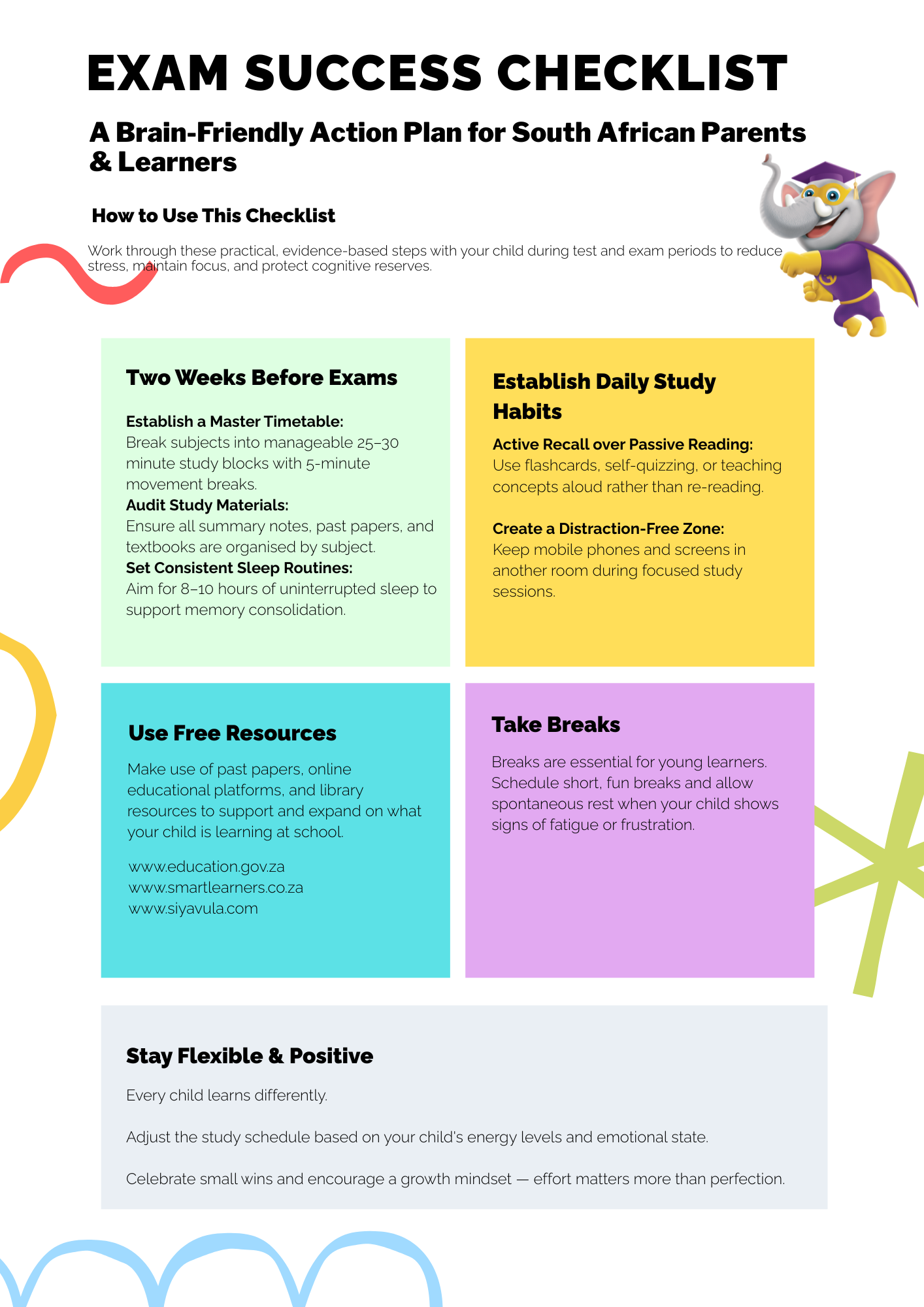
Supporting a child through tests and exams isn’t only about how many hours they spend studying. Sleep, breaks, movement, nutrition, realistic expectations and the way we respond to stress all matter too. We’ve put these principles into a practical resource parents can use at home.
Download the Vie&Sante Exam Success Checklist
Frequently Asked Questions
How can I tell if my child is stressed or simply avoiding homework?
Stress can sometimes appear as procrastination, irritability, distraction or resistance. Rather than assuming a child is being difficult, look at whether the behaviour is unusual for them and consider what else may be happening around school, sleep, relationships or their routine.
Why does my child know the work at home but go blank during tests?
Pressure can make it more difficult to retrieve information, even when it has been learnt. Helping children prepare consistently, get sufficient sleep and develop strategies for managing test-day nerves may help.
How long should children study at a time?
There is no single study period that suits every child or every age. Shorter, focused sessions with regular breaks can be more manageable than expecting an already tired child to concentrate for long uninterrupted periods.
What can I do when homework turns into a meltdown?
Stop the task temporarily. Help your child calm down before attempting to continue. A short break, slow breathing, movement or a change of environment may be more productive than pushing through escalating frustration.
When should I seek professional support?
If changes in mood, sleep, eating, behaviour, anxiety or school functioning are persistent or concerning, speak to an appropriate healthcare or educational professional.
DISCLAIMER: This article is for educational purposes and is not intended to provide medical, psychological or diagnostic advice. Every child’s needs are different. Speak to an appropriate healthcare professional if you have concerns about your child’s physical or emotional wellbeing.